Key takeaway
It is completely understandable why so many businesses want to jump straight into tactics—launching Google Ads, SEO, or a shiny new website. When you need leads and visibility, action feels like progress.
But action without strategy is just an expensive way to generate noise. Without a clear roadmap, digital campaigns often move incredibly fast in the wrong direction.
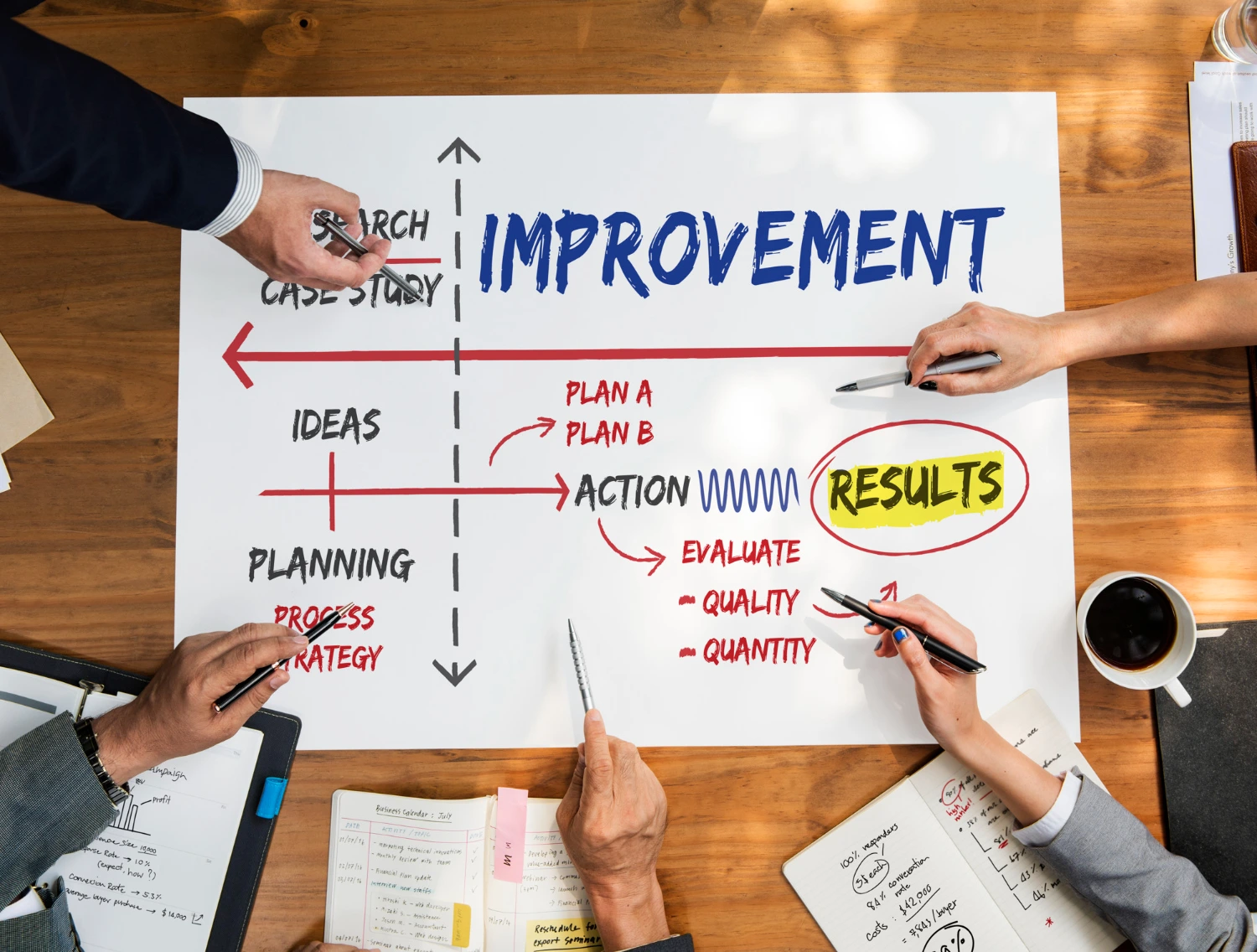
This is why the Discover Phase is critical. It is the planning stage that turns guesswork into a clear growth system, helping Australian businesses define goals, understand customers, choose the right channels, and measure success before money is spent.
For a digital marketing partner like Pulse Reach Digital, discovery is not a delay. It is the strategic guardrail that protects your investment and ensures every subsequent decision has the strongest possible chance of working. This upfront strategy is especially vital today: Google’s emphasis on helpful, people-first content means that deep, intentional planning is now the only way to win in SEO, AEO, and AI search visibility.
What Is the Discover Phase in Digital Marketing?
The Discover Phase is the research and strategy stage before digital marketing execution starts. It helps a business understand its audience, goals, market, competitors, channels, risks, and success metrics before launching SEO, ads, content, social media, or website work.
In simple terms, discovery answers one core question:
What should we do, and why should we do it?
That question matters because digital marketing has many moving parts. A business can invest in Google Ads, SEO, social media, email, content, landing pages, analytics, automation, and conversion optimisation. But not every channel is right for every business at every stage.
For example, a Sydney service business may need local SEO and landing pages before scaling paid ads. A Melbourne ecommerce brand may need conversion tracking and product feed improvements before increasing ad spend. A Brisbane B2B company may need stronger positioning and sales enablement content before publishing more blogs.
Discovery prevents random action. It creates a clear path.
According to digital.gov.au, before teams start designing and building, they need to understand users and what those users need a service to do. The same principle applies to digital marketing projects.
Why We Never Start a Project Without a Strategy
We never start a project without a strategy because digital marketing works best when every activity connects to a clear business goal. Strategy defines the audience, message, offer, channel, budget, timeline, KPIs, and next steps before execution begins.
Without strategy, businesses often make decisions based on trends, competitor pressure, or assumptions.
They may say:
“We need to post more.”
“We need Google Ads.”
“We need to rank for every keyword.”
“We need a new website.”
“We need AI content.”
Sometimes those things are true. Sometimes they are not.
A discovery process tests those assumptions before time and money are spent. It looks at what the business wants, what customers need, what competitors are doing, and what the current digital data shows.
Pulse Reach Digital already positions its services around strategy, SEO consulting, Google Ads management, keyword research, landing-page guidance, social media planning, content creation, analytics, and performance tracking. The Discover Phase gives those services a stronger foundation.
Strategy also helps avoid the common “channel-first” mistake. A project should not begin with “we need Facebook ads” or “we need blogs”. It should begin with the business problem.
The better starting point is:
Who are we trying to reach?
What do they care about?
What stops them from buying?
Where do they search or spend time?
What proof do they need?
What action should they take next?
How will we know this worked?
What Happens During the Discover Phase?
During the Discover Phase, the agency and client review the business, audience, market, competitors, website, content, search demand, analytics, offers, customer journey, and growth goals. The outcome is a strategy that guides execution.
A strong discovery process usually includes:
Business Goal Review
The first step is to understand what the business wants to achieve.
This may include:
- More qualified leads
- More online bookings
- Better local visibility
- More ecommerce sales
- Stronger brand awareness
- Lower cost per lead
- Better sales and marketing alignment
- Higher conversion rates
- Stronger AI and search visibility
The important point is that goals must be specific.
“Get more traffic” is not enough.
A better goal is:
“Increase qualified quote enquiries from commercial clients in Sydney by 30% over six months.”
That goal gives the strategy a target.
Audience Research
Audience research identifies who the business is trying to reach, what those people need, and how they make decisions. business.gov.au recommends understanding current customers, potential market segments, behaviours, preferences, online channels, and the best ways to engage people online.
For Australian businesses, this step is especially important because customer behaviour can change by city, industry, income level, age group, and buying stage.
A family looking for a local service in Adelaide behaves differently from a procurement manager comparing B2B suppliers in Perth. A first-time ecommerce buyer behaves differently from a repeat customer who already trusts the brand.
Discovery helps map these differences.
Competitor and Market Review
Competitor research shows what other businesses are doing well and where gaps exist.
This includes:
- Search rankings
- Website structure
- Service pages
- Blog topics
- Ad messaging
- Social media activity
- Reviews and reputation
- Local SEO presence
- Content quality
- Calls to action
- Offers and pricing signals
- Backlink profile
- Trust signals
The goal is not to copy competitors. The goal is to find opportunities.
If competitors only publish basic service pages, you may win with helpful guides, local landing pages, FAQs, case-style examples, comparison content, and stronger proof.
If competitors run ads to weak landing pages, you may win by improving the offer, page experience, and conversion path.
If competitors have vague messaging, you may win with clearer positioning.
Website and Content Audit
A website audit reviews how well the current site supports growth.
This may include:
- Page speed
- Mobile usability
- Navigation
- Indexing
- Technical SEO
- Internal links
- Conversion paths
- Forms and calls
- Content gaps
- Service page depth
- Metadata
- Schema markup
- Image optimisation
- Analytics setup
- Landing page quality
A website can look attractive and still fail to convert.
Discovery looks beyond design. It asks whether the website helps the right visitor understand, trust, and contact the business.
Channel and Campaign Review
Not every digital channel deserves the same priority.
The Discover Phase helps decide whether the business should focus on:
- SEO
- Google Ads
- Meta Ads
- LinkedIn Ads
- Social media content
- Email marketing
- Content marketing
- Conversion rate optimisation
- Reputation management
- Local SEO
- Marketing automation
- Landing pages
- AI search visibility
business.gov.au recommends choosing online channels and tools based on audience research, then setting measurable targets for each digital goal.
This is where discovery becomes practical. It turns “we should do everything” into “these are the channels most likely to help first.”
Why the Discover Phase Matters More in 2026
The Discover Phase matters more in 2026 because people now discover brands across search engines, social platforms, AI tools, review sites, maps, videos, and recommendation feeds. A weak strategy can leave a business visible in one place but invisible where buyers actually decide.
Digital marketing is no longer only about ranking on Google.
A customer may discover a business through:
- Google Search
- Google Maps
- Google Discover
- AI Overviews
- ChatGPT Search
- Bing Copilot
- Gemini
- Perplexity
- TikTok
- YouTube
- Online reviews
- Industry directories
- Word of mouth
This makes strategy more important, not less.
DataReportal reported 21.0 million active social media user identities in Australia in October 2025, equal to 77.7% of the population at the end of 2025, while noting that these figures may not represent unique individuals.
That does not mean every business should post everywhere. It means your audience is likely active somewhere online, and discovery helps identify where that somewhere is.
Google Discover also rewards content that aligns with user interests, is indexed, follows content policies, uses compelling titles, and includes high-quality large images without clickbait.
For AI search and AEO, the same idea applies. Content must be clear, useful, structured, and trustworthy enough to be understood, summarised, and cited.
What Are the Benefits of the Discover Phase?
The main benefits of the Discover Phase are clarity, reduced risk, stronger targeting, better budgeting, better channel selection, improved stakeholder alignment, and clearer measurement. It helps businesses spend with purpose instead of reacting to trends.
Here are the biggest benefits.
1. It Reduces Guesswork
Marketing guesswork is expensive.
A business may spend months posting content that does not reach buyers. It may run ads to the wrong audience. It may redesign a website without fixing the real conversion issue.
Discovery replaces guesses with evidence.
That evidence may come from analytics, customer interviews, keyword research, competitor research, CRM data, sales feedback, or search behaviour.
2. It Aligns Stakeholders
Many projects fail because decision-makers are not aligned.
The owner wants leads.
The sales team wants better quality enquiries.
The marketing team wants more content.
The designer wants a modern website.
The ads specialist wants budget.
The customer wants a simple answer.
Discovery brings these views together before execution begins.
It creates a shared plan everyone can understand.
3. It Improves Budget Decisions
A budget without strategy can disappear quickly.
Discovery helps decide where money should go first. For example, a business may discover that its website does not convert mobile users. In that case, increasing ad spend may not solve the real problem.
Another business may discover that it has strong conversion rates but low visibility. In that case, SEO, Google Ads, or content may be the right next move.
4. It Strengthens Messaging
Good marketing is not only about visibility. It is about relevance.
Discovery helps define:
- What the customer cares about
- What pain points matter most
- What objections block action
- What proof builds trust
- What offer feels valuable
- What language customers use
This matters for SEO, ads, website copy, social posts, email, and sales conversations.
5. It Creates Better Measurement
A campaign cannot be improved if success is not defined.
Discovery sets KPIs before the project begins.
Examples include:
| Goal | Better KPI |
| More traffic | Organic sessions from target suburbs or services |
| More leads | Qualified enquiries, not just form fills |
| Better ads | Cost per qualified lead |
| Better content | Assisted conversions and ranking growth |
| Better social media | Website visits, enquiries, saves, shares, and engagement quality |
| Better website | Conversion rate and enquiry completion rate |
This makes reporting more meaningful.
What Should a Discover Phase Deliver?
A Discover Phase should deliver a clear strategy document, audience insights, competitor findings, channel priorities, messaging direction, KPIs, recommended actions, timeline, and next-step roadmap. It should make the project easier to execute.
The final output should not be a vague PDF full of buzzwords.
It should be a useful working document.
A strong discovery deliverable may include:
- Business goals
- Audience profiles
- Buyer journey map
- Search intent map
- Competitor gap analysis
- Website audit findings
- Content opportunities
- Channel recommendations
- Messaging pillars
- SEO priorities
- Paid media recommendations
- Social media direction
- Conversion improvements
- Measurement framework
- Budget guidance
- 30, 60, and 90-day action plan
For Pulse Reach Digital, this type of deliverable can connect directly to services such as SEO strategy consulting, Google Ads management, social media planning, content creation, and analytics tracking.
How the Discover Phase Supports SEO and AEO
The Discover Phase supports SEO and AEO by identifying search intent, entities, audience questions, content gaps, technical issues, trust signals, and structured answers before content is created. This makes content easier for people and answer engines to understand.
Search engines and AI answer systems need clarity.
Discovery helps create that clarity through:
- Search intent analysis
- Entity mapping
- Topic clusters
- FAQ planning
- Schema recommendations
- Internal link planning
- Helpful content reviews
- Source-backed claims
- Clear headings
- Concise answer sections
- Original examples
- Trust-building proof
Google’s people-first content guidance encourages creators to assess whether their content is helpful and reliable for people, not made mainly for ranking manipulation.
That means discovery should ask:
Does this content answer a real question?
Does it show experience?
Does it help the reader make a decision?
Does it add something competitors missed?
Is it clear enough for AI summaries?
Is it trustworthy enough to earn a citation?
AEO is not about stuffing FAQs into a page. It is about making the answer genuinely useful.
How the Discover Phase Supports Google Discover
The Discover Phase supports Google Discover by helping a business create content that is timely, visual, useful, emotionally engaging, and aligned with audience interests. It also helps avoid weak titles, thin content, and generic topics.
Google Discover is different from normal search. Users are not typing a query. Content appears because it matches their interests.
That means the article must earn attention.
Discovery helps answer:
- What does our audience care about right now?
- What topic has a strong emotional hook?
- What original insight can we add?
- What image would make someone stop scrolling?
- What angle is useful without being clickbait?
- What story can make the topic feel real?
For this article, a Discover-friendly angle is:
“Most marketing waste does not start in execution. It starts before execution, when strategy is skipped.”
That is emotional, practical, and relevant to business owners.
A strong featured image could show a marketing team choosing between two paths: “guesswork” and “strategy”. The visual would support the story without exaggeration.
Common Mistakes Businesses Make Before Starting Digital Marketing
The most common mistakes are choosing channels too early, copying competitors, ignoring analytics, skipping audience research, setting vague goals, underestimating content quality, and measuring vanity metrics instead of business outcomes.
Here are the mistakes discovery helps prevent.
Mistake 1: Starting With Tactics
Tactics are actions. Strategy is direction.
SEO, ads, blogs, reels, email, and landing pages are tactics. They need a reason.
Mistake 2: Copying Competitors
Competitors can show market standards, but they cannot define your strategy.
Their audience, budget, offer, team, and goals may be different.
Mistake 3: Ignoring the Sales Team
Sales teams hear real objections every day.
If marketing ignores sales, campaigns may attract leads that never convert.
Mistake 4: Tracking the Wrong Metrics
Clicks, impressions, and followers are not always bad metrics. But they are incomplete.
The better question is:
Did this activity help the business move closer to its goal?
Mistake 5: Publishing Content Without a Point
Content should have a job.
It may educate, compare, answer, reassure, rank, convert, build trust, or support sales.
If the job is unclear, the content is likely weak.
Discover Phase vs Execution Phase
The Discover Phase defines the plan, while the execution phase puts the plan into action. Discovery decides the audience, goals, message, channel, and measurement. Execution creates, launches, tests, and improves the work.
| Area | Discover Phase | Execution Phase |
| Purpose | Understand and plan | Build and launch |
| Focus | Research, strategy, alignment | Content, ads, SEO, design, optimisation |
| Main question | What should we do and why? | How do we do it well? |
| Output | Strategy and roadmap | Campaigns, pages, assets, reports |
| Risk | Wrong assumptions | Poor implementation |
| Best result | Clear direction | Measurable progress |
Both phases matter.
Discovery without execution is only theory. Execution without discovery is only activity.
The strongest projects use both.
A Practical Example for an Australian Business
A practical Discover Phase example is a local Australian service business that wants more leads but does not know whether SEO, Google Ads, or social media should come first. Discovery reviews data, audience behaviour, competitors, website issues, and conversion paths before choosing a channel.
Imagine a home services business in Melbourne.
The owner says:
“We need more leads. Can you run Google Ads?”
A weak agency says yes immediately.
A strategy-first agency asks better questions:
Which services are most profitable?
Which suburbs matter most?
What does a good lead look like?
What does a bad lead look like?
Is the website converting?
Are calls being tracked?
Do competitors have stronger local pages?
Are reviews helping or hurting trust?
Is there enough budget for paid search?
Would SEO create better long-term value?
After discovery, the answer may be:
- Fix tracking first
- Improve service pages
- Build suburb landing pages
- Run Google Ads for urgent services only
- Add review proof to landing pages
- Create helpful FAQ content
- Monitor cost per qualified lead
That is a strategy. It gives every action a purpose.
When Should You Invest in a Discover Phase?
You should invest in a Discover Phase when the project has meaningful cost, multiple stakeholders, unclear goals, poor past results, a new market, a website rebuild, a rebrand, or a campaign that needs measurable outcomes.
Discovery is especially useful when:
- You are launching a new website
- You are entering a new Australian market
- Your ads are spending but not converting
- Your SEO traffic is flat
- Your content is not generating leads
- Your social media has engagement but no business impact
- Your team disagrees on direction
- Your brand message feels unclear
- You do not know which channel to prioritise
- You want better AI search visibility
A very small task may not need deep discovery. For example, updating one landing page may only need a short brief.
But a full digital marketing project should start with strategy.
How Pulse Reach Digital Can Use the Discover Phase
Pulse Reach Digital can use the Discover Phase to connect strategy, SEO, paid search, social media, content, analytics, and conversion planning into one clear roadmap. This helps Australian businesses avoid scattered marketing and build campaigns around real goals.
For a digital marketing services business, discovery is also a trust signal.
It shows the client that the agency is not selling random services. It is diagnosing the problem first.
Pulse Reach Digital can position the Discover Phase as the first step before:
- SEO strategy consulting
- Google Ads management
- Social media marketing
- Content planning
- Website improvements
- Landing page guidance
- Analytics and performance tracking
- Digital growth roadmaps
This also supports E-E-A-T because it shows process, expertise, transparency, and responsible advice.
Discover Phase Checklist
A Discover Phase checklist should cover business goals, target audience, competitors, current website performance, content gaps, SEO opportunities, paid media readiness, social media presence, analytics setup, conversion paths, budget, timeline, risks, and KPIs.
Use this checklist before starting a project:
- Define the business goal.
- Identify the ideal customer.
- Map the customer journey.
- Review current website performance.
- Audit SEO visibility.
- Analyse competitors.
- Review paid media readiness.
- Check social media channels.
- Review existing content.
- Check analytics and tracking.
- Identify conversion barriers.
- Define success metrics.
- Set budget and resource limits.
- Choose priority channels.
- Build a 30, 60, and 90-day roadmap.
This list keeps the project grounded.
Final Thoughts: Strategy Is Not a Delay
The Discover Phase is not a delay. It is the step that makes digital marketing faster, clearer, and more accountable. It helps businesses understand what matters before investing in execution.
Australian businesses do not need more random marketing activity.
They need better direction.
A strategy-first approach helps every campaign, page, post, ad, and report connect back to a real business goal. It also helps teams make smarter decisions when markets change, platforms update, and customer behaviour shifts.
If your next project matters, do not start with tactics.
🚀 Ready to stop guessing and start scaling?
Don’t waste another dollar on random marketing tactics. Book a Discovery Session with Pulse Reach Digital today, and let’s build a clear, measurable roadmap for your business.
FAQs
1. What is the Discover Phase?
The Discover Phase is the research and strategy stage before digital marketing execution. It reviews goals, audience, competitors, channels, website performance, messaging, and KPIs so the project starts with clear direction.
2. Why is the Discover Phase important?
It reduces guesswork. It helps businesses choose the right channels, set measurable goals, understand customers, avoid wasted budget, and create campaigns that support real business outcomes.
3. Should every digital marketing project start with discovery?
Most meaningful projects should. A small one-off task may only need a brief, but SEO, paid ads, website redesigns, content plans, and full marketing campaigns need discovery before execution.
4. How long does a Discover Phase take?
It depends on project size. A small project may need a short workshop and audit. A larger project may need several weeks of research, stakeholder interviews, competitor analysis, and strategy planning.
5. What should be included in a Discover Phase?
It should include business goals, audience research, competitor analysis, website review, SEO audit, content review, channel planning, messaging direction, KPI planning, budget review, and a clear action roadmap.
6. Is discovery the same as strategy?
Discovery supports strategy, but they are not exactly the same. Discovery gathers insight. Strategy uses that insight to decide what actions should happen, in what order, and why.
7. Can discovery improve SEO results?
Yes. Discovery helps identify search intent, keyword gaps, technical issues, content opportunities, internal linking needs, entities, FAQs, and trust signals before SEO work begins.
8. Can discovery improve Google Ads results?
Yes. It can identify the right audience, offer, landing page, keywords, conversion tracking, budget, and lead-quality goals before campaigns launch.
9. Why not just start marketing and adjust later?
Testing is useful, but testing without direction can waste money. Discovery gives the first test a stronger foundation and makes later optimisation more meaningful.
10. What is the biggest mistake businesses make before digital marketing?
The biggest mistake is starting with tactics instead of strategy. Businesses often choose ads, posts, blogs, or redesigns before defining goals, audience, message, and measurement.
11. How does discovery help with AI Overviews and answer engines?
It helps structure content around clear questions, concise answers, entities, credible sources, schema, and useful explanations. This makes content easier for AI systems to understand and summarise.
12. What does a business receive after discovery?
A business should receive a strategy roadmap. This may include audience insights, competitor gaps, channel priorities, SEO recommendations, content ideas, KPIs, timeline, and next-step actions.
13. Is the Discover Phase useful for small businesses?
Yes. Small businesses often have limited budgets, so discovery helps prioritise the highest-impact actions instead of spreading money across too many channels.
14. Does discovery replace ongoing optimisation?
No. Discovery sets the starting direction. Ongoing optimisation uses real campaign data to improve performance after execution begins.
15. Who should be involved in the Discover Phase?
Business owners, marketing leaders, sales teams, customer-facing staff, project managers, SEO specialists, paid media specialists, designers, and content strategists may all provide useful insight.


0 Comments