
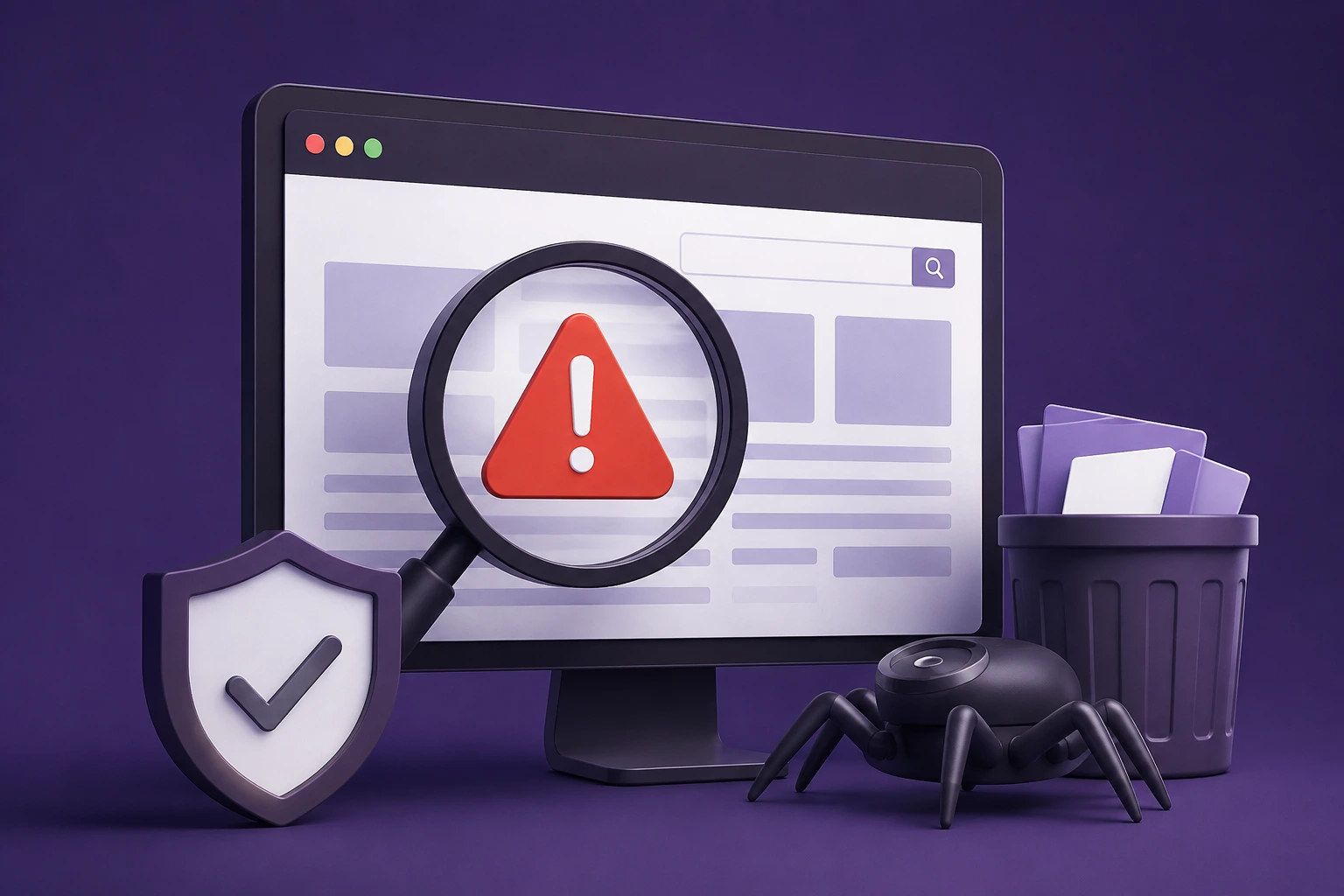
If you’ve noticed your website’s traffic wobble this week, or you’ve seen SEO people online suddenly talking about a “spam update,” you’re not imagining it. On 18 August 2026, Google switched on a new spam update, and it’s rolling out globally over the next few days.
You don’t need to be a technical SEO expert to understand this. Below, we break down what a spam update actually is, what Google is checking for, and — most importantly — what it means for an everyday business website.
What is a “spam update,” exactly?
Think of Google Search like a huge library, and Google’s ranking system as the librarian deciding which books to put on the front table. Most of the time, the librarian is quietly reorganising shelves in the background. A spam update is different — it’s a scheduled, announced clean-up where Google specifically goes looking for websites that are trying to trick the system, rather than genuinely help readers.
A core update reassesses how good and useful content is overall. A spam update is narrower — it targets sites that break Google’s rules on purpose, like hiding text, buying links, or mass-producing low-value pages. This is the third spam update Google has released in 2026, after updates in March and June.
What was announced this time?
Google logged the update on its official Search Status Dashboard at 9:27am Pacific time on 18 August. It’s a global rollout covering every language and region, and Google says it should take a few days to fully complete. Notably, Google hasn’t introduced any brand-new rules with this update — it’s enforcing the spam policies it already has published, just more thoroughly.
The kinds of things Google is cracking down on
Here’s the good news: if you run a genuine business website with honest content, you’re very unlikely to be affected. These updates target deliberate manipulation. In plain language, here’s what’s on Google’s radar:
Cloaking
Showing search engines one page but showing visitors something completely different — a classic bait-and-switch.
Hidden text
Stuffing keywords into a page using white text on a white background, or text sized down to nothing, so only Google “sees” it.
Doorway pages
Dozens of near-identical pages built only to funnel visitors toward one real page — with little value along the way.
Scaled content abuse
Mass-producing low-value pages — whether with AI, automation, or manual methods — primarily to manipulate search rankings rather than help readers.
Link spam
Buying links, joining “link exchange” schemes, or spamming forums and comment sections with keyword-stuffed links.
Scraped content
Copying content from other websites (sometimes with a few words swapped) and republishing it as if it were original.
Thin affiliate pages
Product pages that just copy the manufacturer’s description with an affiliate link, adding no real review or insight.
Scam & fraud
Fake customer support pages, impersonation of real businesses, or false claims designed to trick visitors into paying money.
None of these are grey areas — they’re all things site owners do on purpose to game the system. If your site doesn’t do any of the above, this update is genuinely not something to lose sleep over.
What should a small business owner actually check?
A quick, non-technical self-check
- Every page on your site is written for a real visitor, not just to target a keyword
- You haven’t used any AI-written content in bulk without a human reviewing and improving it
- You haven’t paid for backlinks, joined a “link exchange,” or posted spammy comments with links
- Any third-party or guest content on your site fits your site’s actual topic and adds real value
- Your product or service pages describe your own experience — not a copy-pasted manufacturer blurb
- You check Google Search Console for a sudden, unusual drop in clicks or impressions after 18 August
If you do notice a ranking drop
Don’t panic on day one — rankings can wobble for a few days while a rollout completes, and a single day of data rarely tells the full story. Give it a week, then compare your Search Console performance report to the weeks before. If the drop is real and sustained, it’s worth an honest audit of your content and backlink profile against Google’s spam policies, rather than guessing.
The bigger picture
Google has now released three spam updates in 2026 alone (March, June, and August), on top of ongoing AI-focused enforcement confirmed back in May that extends these same spam rules to AI Overviews and AI Mode, not just traditional blue-link results. The direction is clear: Google is investing heavily in catching manipulation, which means genuinely useful, well-written, human-reviewed content keeps getting more valuable, not less.
Not sure where your site stands?
We can run a quick technical and content audit against Google’s current spam policies, so you know exactly where you stand before the update fully rolls out.
Get a Free Site Check Or call us directly: 0468 167 862Keep reading on the Pulse Reach Digital blog
- Explore our full SEO services in Blacktown for ongoing technical health checks
- See how our SEO & AEO packages keep your site compliant and visible as Google updates roll out
- Talk to our team directly via the Pulse Reach Digital contact page


0 Comments